


Intent
At FPHS, we are proud to have been awarded the top grade by the National Centre for Computing Education (NCCE) and gained the Computing Mark Award, recognising our provision in Computing. This comprehensive award evaluates various aspects of our offer including, curriculum; teaching, learning & assessment; equity, diversity, inclusion & SEND and impact on outcomes, as well as staff development. As a result, we have demonstrated our commitment to providing a compelling learning experience in Computing.
We aim to design and deliver compelling learning experiences to enthuse and equip our young people with the crucial computing skills and knowledge they need to succeed and to inspire them with the incredible possibilities by this broad, complex and fascinating subject.
Computing goes beyond knowing simply how to use a computer but understanding how computer systems work, are designed and programmed, understanding the hardware and software, the Internet and the rapidly expanding world of digital communications.
Computing incorporates techniques and methods for solving problems, including a distinct way of thinking and working. It allows pupils to tackle problems, to break them down into solvable chunks and to devise algorithms to solve them. This aligns perfectly with our school vision for creativity.
Specialist teaching, use of relevant and emerging tools, services and resources, guided discovery and collaborative learning approaches provide the compelling learning experience that ensures that, pupils will develop computational thinking skills enabling them to become resilient problem solvers; ones who are creative and able to apply their skills and understanding effectively and responsibly.
Computing skills and understanding are more vital now than ever. The way people work both in industry and at home is changing rapidly. New products, technologies and applications develop and become part of our lives at such speed that a fundamental understanding of Computing provides the foundation for pupils’ understanding on how their world is changing around them.
Curriculum
At Key stage 4 pupils have the opportunity to undertake the OCR Computer Science GCSE which gives an overview of many of the opportunities provided by Computer Science.
The course is assessed through two examinations in Year 11 and will cover the topics of Systems architecture, Memory and storage, Computer networks, connections and protocols, Network security, Systems software, Ethical, legal, cultural and environmental impacts of digital technology
With the second paper covering Algorithms, Programming fundamentals, Producing robust programs, Boolean logic, Programming languages and Integrated Development Environments
Summary of Assessment
Both components are assessed through two written papers each lasting 1 hour and 30 minutes and worth 50% of total GCSE (160 marks).
Paper 1 exam paper is worth 80 marks.
Paper 2 exam paper has two sections: Section A (50 marks) and Section B (30 marks).
Section A is the theory element for this paper and Section B is assessing students’ ability to write or refine algorithms.
Students will also be given the opportunity to undertake programming tasks using the Python programming language during their course of study.
Cultural Experiences
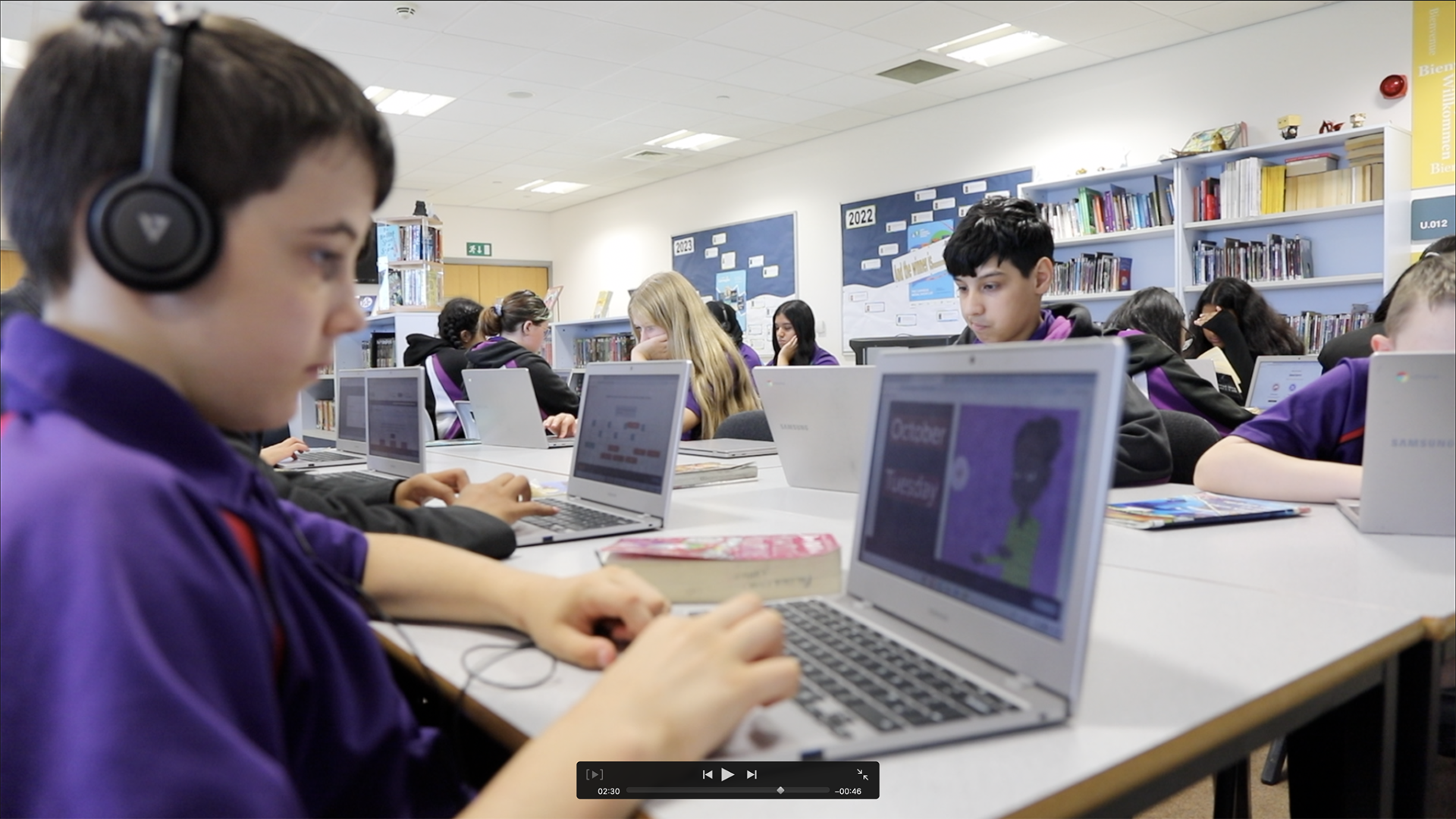
In order to unlock the potential of our pupils we offer both Key Stage 3 and Key Stage 4 daily, lunch-time sessions for using computers. These are for pupils to complete homework/personal study or tackle any of our current challenges.
The challenges could be completing badges on the industry recognised iDEA award or embarking on cyber security challenges.
Completion of these can gain recognition that pupils include in their Record of Achievement.